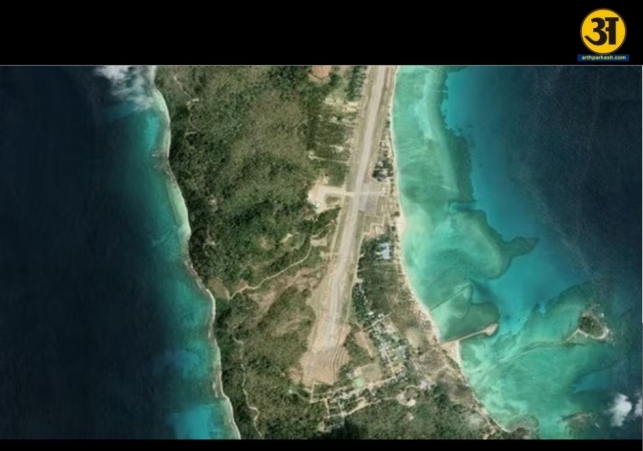
Myanmar’s Coco Islands hold key strategic value for India
Myanmar assures India on Coco Islands amid security concerns: Why this territory matters strategically
- By Gurmehar --
- Friday, 10 Oct, 2025
Myanmar has assured India that there is no Chinese presence on the Coco Islands, a small chain of islands in the Bay of Bengal. This assurance came during the second annual defence dialogue between India and Myanmar, held in Naypyitaw from September 25–27, 2025. India’s Defence Secretary, Rajesh Kumar Singh, met Major General Kyaw Ko Htike, Chief of Myanmar’s Armed Forces Training, to discuss security matters.
According to reports, the Myanmar authorities told India that “not a single Chinese national” is present on the islands, attempting to ease Indian concerns over potential Chinese military activity. However, India is still waiting for Myanmar to approve a naval visit to the Coco Islands. Such a visit would allow India to closely monitor the region and verify the absence of any foreign military presence.
While Myanmar’s assurance is positive, experts and Indian security agencies continue to monitor developments closely. Satellite images in recent years have shown ongoing infrastructure upgrades on the islands, including an extended 2,300-metre airstrip capable of handling transport aircraft, as well as new barracks and facilities that could accommodate over 1,500 military personnel. These developments, even without Chinese troops stationed there, highlight why the Coco Islands remain a strategic concern for India.
Why the Coco Islands are important for India
The Coco Islands are strategically located less than 100 miles from India’s northernmost Andaman Island, Landfall Island. This proximity makes them extremely significant for India’s security, as any foreign presence could allow surveillance of Indian naval and missile activities. Indian authorities have long considered the islands a sensitive area due to their location near key shipping routes and the Strait of Malacca, one of the world’s busiest maritime passages.
The islands’ location is particularly important for monitoring India’s naval movements, submarines, and missile tests. India’s missile ranges, such as those in Balasore, and naval operations from the Andaman and Nicobar Islands could be observed if a foreign country establishes military or intelligence facilities on the Coco Islands. Such surveillance would directly affect India’s national security.
Another critical factor is control over sea lanes. The Coco Islands lie near major sea lines of communication (SLOCs) in the Bay of Bengal, which are vital for global trade. A presence on these islands could allow monitoring of shipping and naval traffic in this strategic region. This is why India closely watches any developments on the islands and their surroundings.
Concerns over China’s influence
India is particularly wary of potential Chinese influence on the Coco Islands. In the past, China has leased land and reportedly built surveillance infrastructure on the islands. Although Myanmar insists that no Chinese troops are stationed there, continued military upgrades have raised legitimate concerns. The construction of airstrips, barracks, and other infrastructure indicates that the islands could be used for strategic operations in the future, even without a direct military presence.
Security experts argue that the Coco Islands’ proximity to India’s territory effectively places them in India’s “backyard”, making surveillance activities especially sensitive. India has repeatedly expressed concerns about any foreign monitoring of its military installations, naval bases, and missile testing facilities. By keeping a close watch on these islands, India aims to ensure that its national security is not compromised.
ALSO READ: Upcoming fighter jets set to modernize the Indian Air Force by 2035
The islands also play a role in regional geopolitics. Any significant presence of foreign military or surveillance infrastructure in the Bay of Bengal could shift the strategic balance in the region. India, as a key maritime power in the Indian Ocean, is particularly focused on ensuring that the Coco Islands do not become a base for monitoring its movements or for projecting influence in nearby sea lanes.
In conclusion, while Myanmar’s assurance that no Chinese presence exists on the Coco Islands is a positive step, India continues to closely monitor the situation. The islands’ strategic location near the Andaman and Nicobar Islands, proximity to major maritime routes, and potential for surveillance make them a vital security concern. India’s request for a naval visit remains pending, and monitoring infrastructure developments on the islands remains a priority. The situation reflects the importance of regional cooperation and vigilance in maintaining India’s maritime and national security interests in the Bay of Bengal region.
By keeping a careful watch on the Coco Islands, India aims to safeguard its naval operations, missile testing activities, and strategic interests in the Indian Ocean, while continuing dialogue with Myanmar to maintain peace and security in the region.
Related News